Alebrijes, Hybrid Creatures and Cultural Imaginaries: An Arts-Based Project at Escola El Viver
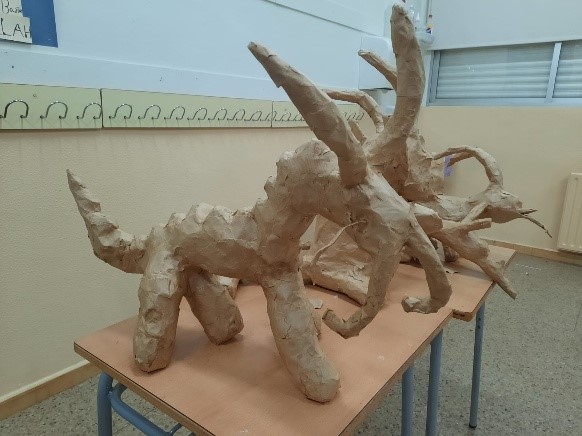
NewsWithin the framework of the PLURART pilot of the European project ALPHABETICA, students from the upper primary community (4th, 5th, and 6th grades) at Institut Escola El Viver are taking part in an arts-based project focused on the creation of alebrijes, hybrid creatures from Mexican artistic tradition.
The project began with a visit to the Museum of World Cultures in Barcelona, where students explored how different cultures around the world have represented animals, often attributing to them symbolic meanings and particular powers. The exhibition also introduced students to the idea of hybridity through representations of animals that combine features from different species and form part of the cultural imaginaries of many societies.
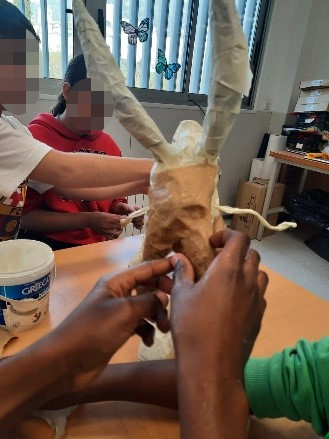
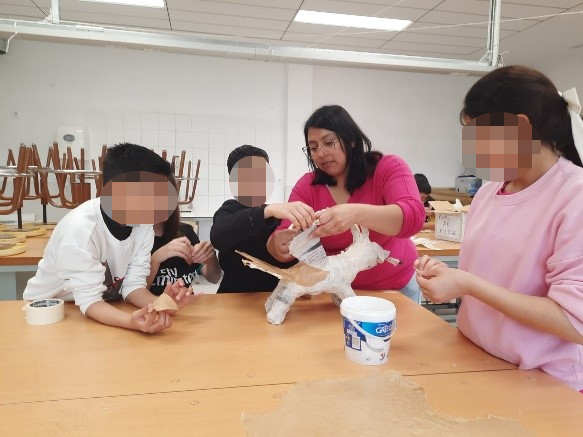
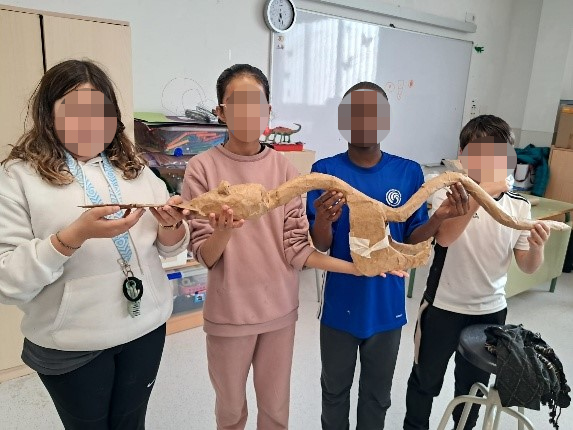
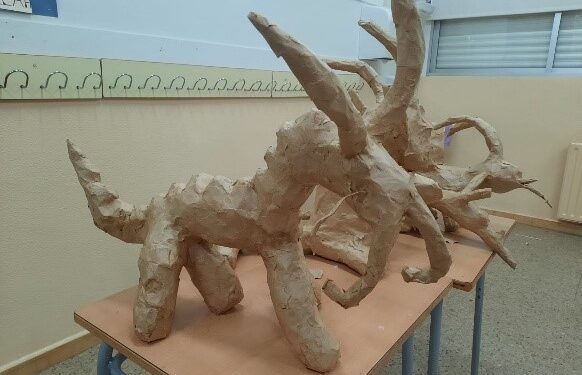
Following the visit, the reflection continued at school, where students discussed the role of animals in different cultures and within their own communities. They shared stories and references about animals (both real and mythical) that are meaningful in their local contexts and in their countries of origin. The project then turned to Mexican culture and the figure of the alebrijes, fantastical creatures that combine elements from different animals. With the guidance of Griselda Pérez, a Mexican artist specialised in the traditional technique of cartonería, students worked in groups to design and create their own alebrijes.
Each alebrije was conceived as a form of personal and creative expression, incorporating symbolic elements connected to students’ identities, imagination, and linguistic repertoires.
The project is still ongoing and is expected to culminate in an exhibition of the alebrijes in a local museum, accompanied by plurilingual narratives created by the students to explain their artworks. In this way, the initiative also aims to move beyond the school borders and engage the local community of Montcada i Reixac, where the school is located.
This type of activity reflects the approach of the PLURART pilot, which seeks to integrate arts-based and plurilingual and pluricultural perspectives to foster meaningful participation, student agency, and the recognition of learners’ cultural and linguistic repertoires.